Before you find product market fit, you can spend months shipping useful work without knowing whether you're building a business. Two customers love it. Four leave. Another will buy if you build a feature you're not sure belongs in the product.
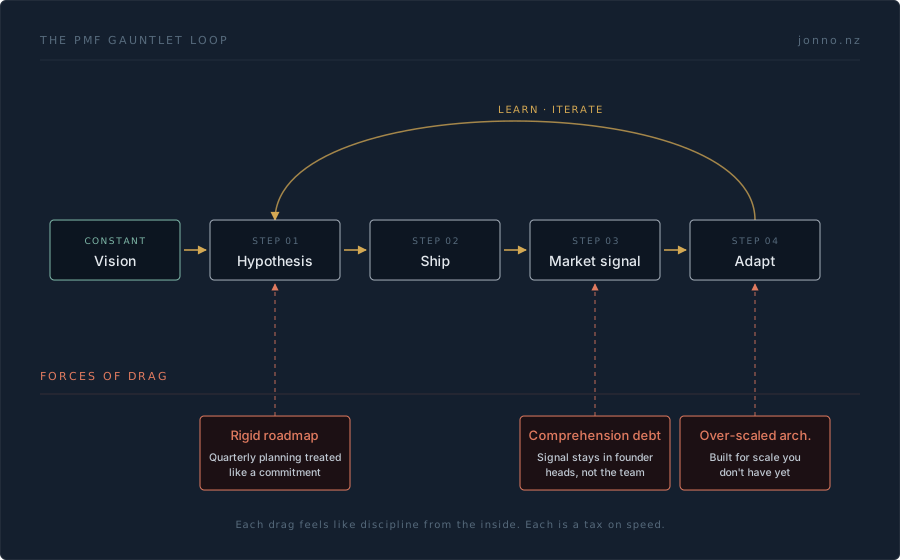
I've seen good teams make that search harder by committing to a roadmap or an architecture before they understood who would pay. The work looked sensible when they started it. A few months later, they needed to change direction and found they had made that expensive.
The pressure reaches the team long before the numbers look convincing. Hiring, customer commitments and technical decisions all have to leave you enough room to learn.
Be clear about the job you're hiring for
Before PMF, the metric you're chasing may change every six weeks. The answer to "what are we doing in three months?" may depend on customer conversations you haven't had yet. You need people who can work with that uncertainty without waiting for someone to resolve it for them.
Some excellent operators prefer a clearer problem and a business with customers whose needs they understand. They can struggle in a company that keeps changing what it wants to be. That tells you something about the fit between the person and the job, rather than their ability.
Be specific about this when hiring. Explain how often priorities have changed, what you know about the market, and which assumptions you're testing. Someone should be able to decide whether that sounds like work they want to do.
Calling it a fast-paced environment tells them very little. Tell them about the feature you stopped building last month and why.
Give the team a reason to keep going
Timing, the economy and regulatory decisions can change demand while you're building. You can have a good team and a plausible product and still struggle to find buyers.
A clear purpose helps the team decide which changes are worth making. They need to understand the customer problem well enough to recognise it when the original product idea fails. Otherwise, each change of plan can feel like starting the company again.
I've watched teams lose confidence when the founder could no longer explain why they were pursuing a market. People could see that the numbers were poor, but they couldn't tell what the company had learned or what would justify another attempt.
The founder has to make those decisions while dealing with their own disappointment. It's hard to reconsider a product when you've spent years building it and persuading people to join you. Treating every result as a verdict on your ability makes it harder to hear what customers are saying.
Keep the product cheap to change
At this stage, I care about how quickly a team can respond when a customer call changes its understanding of the problem. A useful change should be possible in days or weeks. If it needs a quarter of coordination, I want to know why.
Premature architecture decisions can account for a lot of that delay. A team splits out microservices before it needs them. Someone brings infrastructure from their last job. A small interface change now touches four repositories. Engineers keep shipping, but more of their time goes into coordinating the work.
In his 2007 PMF essay, Marc Andreessen argues that founders may need to rewrite the product or move markets to find a fit. Those options depend on the company being able to make the change. Contracts, process and architecture can each turn a reasonable decision into six months of work.
I prefer familiar tools and a small number of components until there's a reason to add more. A design that accommodates every possible future is a lot to maintain while you're working out which future is plausible.
Look after the customers who bought the first version
Your early customers may have bought something different from the product you're now trying to build. Their revenue matters, and so do the commitments you made to them.
Keeping every customer happy can pull you into custom work. Moving too quickly can lose the customers paying your bills. You have to decide which requests improve the product for the market you're pursuing, and which ones you are fulfilling to honour an existing agreement.
Explain that distinction to the team. An engineer fixing a problem for an early customer should know why that work takes priority, even if it doesn't advance the new roadmap. Customers deserve the same clarity about what you'll support and where the product is going.
Their feedback can help you refine the direction. It can also be a request for a service you never intended to offer. Those need different responses.
Share what you're learning
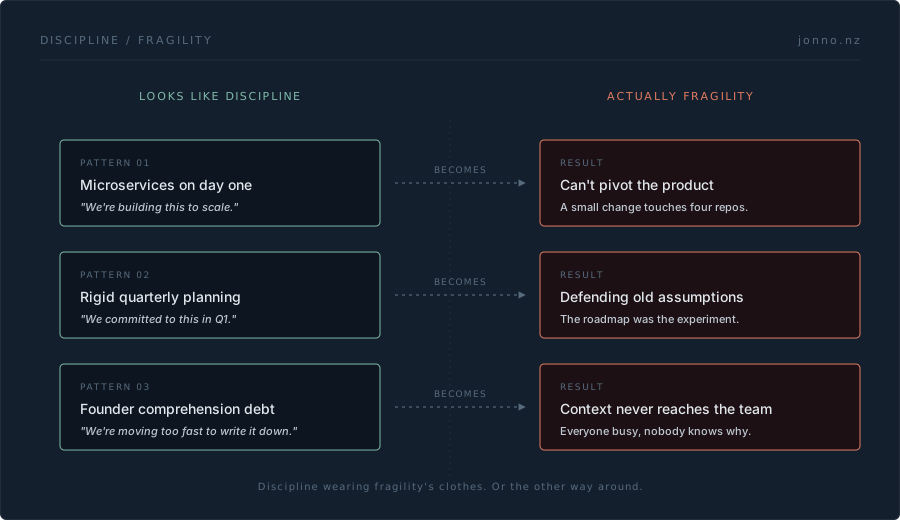
Product teams need to revise the roadmap when the evidence changes. A plan records what you intend to test and why. After a month of customer conversations, some of those assumptions may be wrong. Defending the old plan because people have committed to it wastes the learning you've paid for.
That doesn't make changing priorities free. Work gets abandoned, people get frustrated, and customers may be waiting for something you promised. Explain what changed and what you will finish before moving on.
Founders can also get ahead of their teams without realising it. You've had the customer calls, heard why a deal fell through and noticed a pattern in the data. Your team is making decisions with last week's information. A request that seems obvious to you may look arbitrary to them.
I think of this as comprehension debt. Small delays in sharing context build up until the founder and the team are working from different assumptions. Sending the revised priorities is only part of the job. People need enough of the reasoning to make the next decision themselves.
Be specific about your advantage
I wouldn't count on an AI feature alone to keep competitors away. A similar interface may be easy to build; the harder question is why a customer would keep choosing your product once they have alternatives.
Anna Demeo's argument about AI moats puts weight on access to useful data, understanding a customer's workflow and distribution. Those are more useful things to investigate than assuming the model or a feature list will give you a lasting lead.
For an early company, these are assumptions to test too. Access to data helps if you can use it to improve a result the customer cares about. An integration matters if it makes the product useful in their daily work. A distribution agreement matters if it reaches buyers.
You still have to make decisions before the evidence is complete. A board update needs to account for a noisy quarter. An engineer needs to know why a feature has moved down the list. Both deserve the reasoning you have, including the parts you haven't worked out yet.