At 1pm UTC on a Friday last June, an airline pilot posted a Show HN: interactive graphs and globes built from years of his own flight logs. It went huge. 1,539 points, the third biggest Show HN of the entire year. By dinner he had 123 comments.
On day three the thread got 3 comments. In week two it got zero. The third best launch out of more than forty thousand, and the conversation was over before the weekend ended.
I wanted to know whether that shape is the exception or the rule, so I scraped every Show HN from the last 12 months using the Algolia HN API: 41,301 posts, plus the full comment tree of every launch that got at least ten comments. About 100,000 comment timestamps. The scraper, the analysis, and the data are all in one repo if you want to check my working.
The pilot's flatline is the rule. The only unusual thing about his launch is that it had a peak.
The median launch gets two points
I went in to measure decay speed. The distribution of outcomes stopped me before I got there.
The median Show HN in my 12 months of data earned 2 points and 0 comments. 61.7% of launches got no comments at all, and 78.9% got one or none. A single upvote from a stranger puts you in the top third.
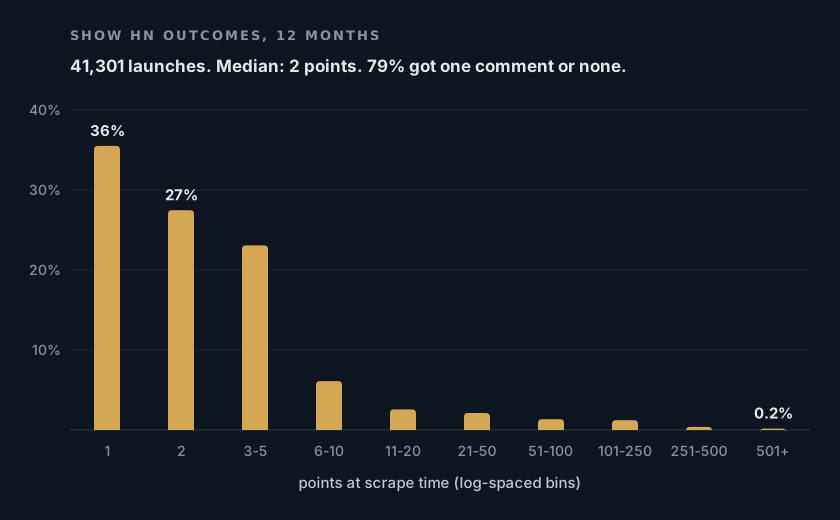
The distribution is a power law with a brutal knee. The 90th percentile is 8 points. Fewer than 2% of launches clear 100. Picture your launch day and you picture the front page. Picture two points and silence instead: that's the median experience, by a wide margin.
I've launched products before (Shopim in 2014, Spotrisk in 2020) and I still found these numbers confronting. Every founder I know treats the launch as the milestone. The milestone, statistically, is a shrug.
The half-life is 7.2 hours
HN doesn't publish vote timestamps, so I'm using comment timing as the proxy for attention. That's a real limitation and I'll come back to it, but comments are the visible half of engagement, and they're what founders refresh the page for.
For the 2,066 launches with at least ten comments, I built each launch's cumulative comment curve: what share of its lifetime comments had arrived by each hour. The median curve crosses 50% at 7.2 hours.
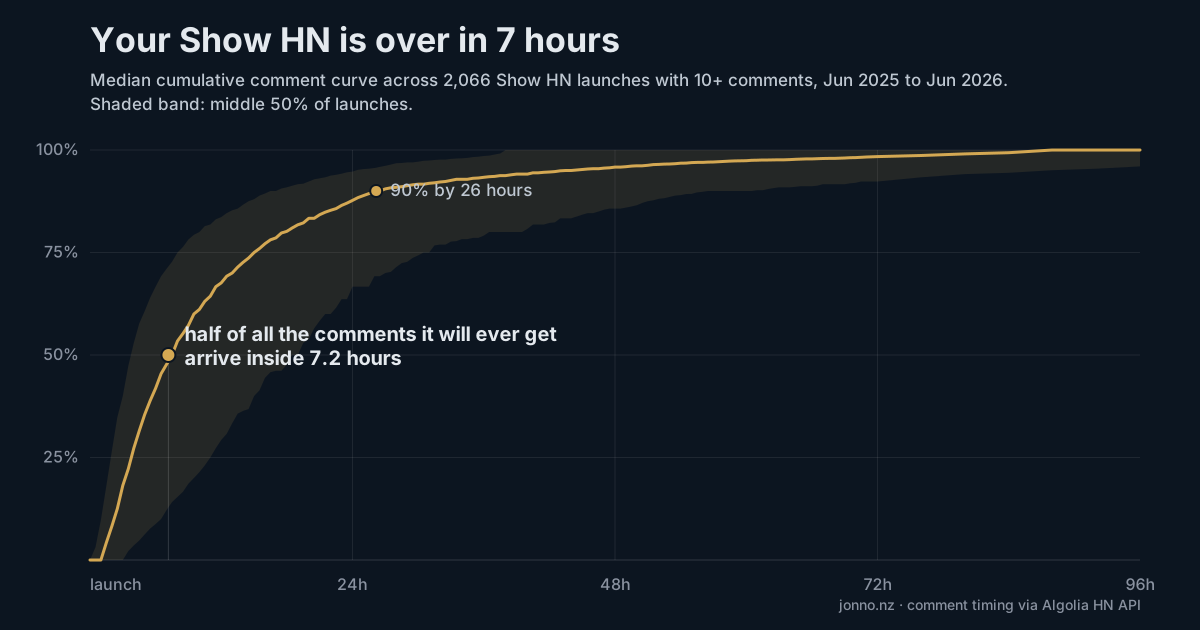
Half of everything anyone will ever say about your launch is said before the first workday ends. 90% is done by hour 26. Even the slow quartile of launches crosses halfway by hour 18.
The mechanism is no mystery. HN's ranking formula divides a story's points by its age raised to the power 1.8, which Ken Shirriff documented years ago. Time sits in the denominator with a bigger exponent than votes get in the numerator, so gravity wins no matter how good your day is going. The front page is a conveyor belt into a furnace, by design. It's why HN stays interesting, and it's why your launch can't stay visible.
I sanity-checked the half-life two ways (median of per-launch crossing times, and the crossing of the median curve) and they agree within 20 minutes. Excluding founders answering their own threads, 19% of all comments, moves the number by four minutes. The 7-hour figure is not an artefact of chatty founders.
Success buys volume, not time
My first guess was that big launches would decay slower. A front-page hit keeps earning impressions, so surely the conversation stretches out.
It doesn't. The top decile of measurable launches (268 points or more, the year's genuine hits) has a median half-life of 7.6 hours. Everything below that decile: 7.1 hours. The biggest launches of the year run on the same clock as a launch that scraped together ten comments.
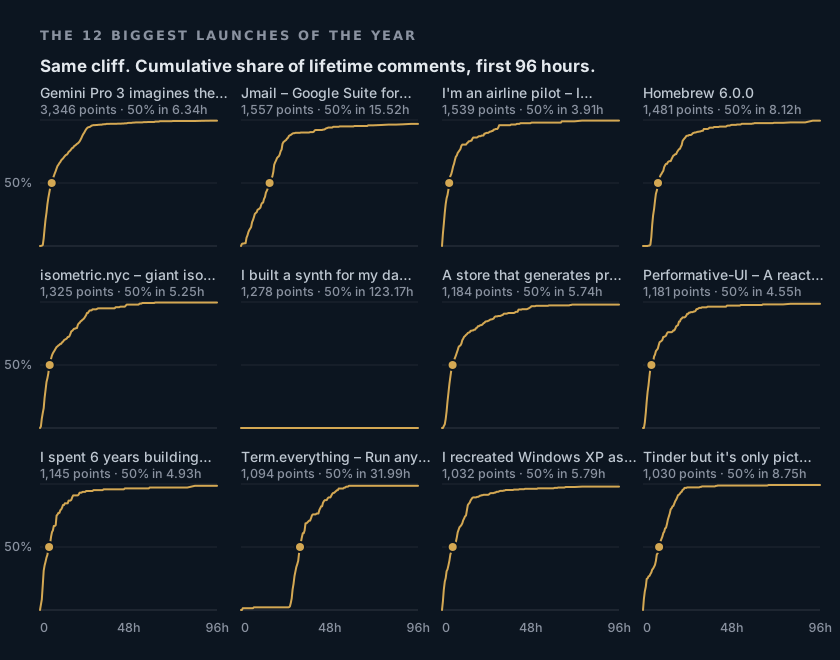
Look at the top 12 launches of the year, the ones every founder dreams about. Homebrew 6.0.0: half done in 8 hours. The 3,346-point monster at number one: half done in 6.3. Two of the twelve flatlined at launch and only took off a day or more later, which is HN's second-chance pool doing its thing, where moderators re-launch overlooked stories with a fresh timestamp. The rescue mechanism exists because without it, nothing gets a second look.
Success multiplies how many people show up. It does nothing to change when they leave.
After hour 48, it's over
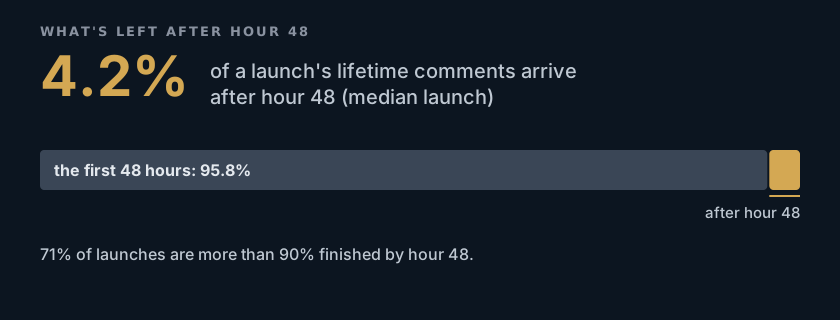
For the median launch, 4.2% of lifetime comments arrive after hour 48. Pool every comment in the dataset together and the number rises to 17%, because the giant launches have longer conversations in absolute terms. Either way you cut it, the second-day cliff is real: 71% of launches are more than 90% finished by hour 48.
And comments are the durable end of attention. Traffic dies faster. Harrison Broadbent's front-page traffic data shows over half the visitor spike gone within 8 hours of submission. The comment thread is the long tail. The clicks are gone by tea time.
A launch is a moment, distribution is a campaign
The takeaway I keep landing on: the launch spike is real, and it's worth having, and it cannot be your distribution plan. It's 48 hours. You can't build a company on 48 hours of attention.
What worked for the products I've been involved with was never the spike. It was the boring compounding stuff: showing up in the places your users already are, week after week, shipping visibly, and giving people a reason to come back after the thread dies. The launch is the starting gun, and most of us have been treating it as the race.
Why I'm building Shipyard
Full disclosure: this analysis had a motive. Staring at forty thousand launches that got a median of zero comments is a big part of why I'm building Shipyard, a feed where you post what you've built and it keeps collecting honest reviews long after launch day, instead of vanishing down page 40 of /newest.
If the numbers above made you wince, Shipyard is my answer to them. The data stands on its own either way, and if you only take one thing from this post, take the 7 hours, and plan your next launch knowing the clock is already running.
Methodology
Everything is reproducible from
the repo with
make reproduce: every number above traces to a named function in analyze.py,
and the scraped data ships in the repo. The corpus is every story tagged
show_hn on the Algolia HN API, posted 18 June 2025 to 18 June 2026, so every
story has at least 14 days of comment history. "Lifetime comments" means live
comments within 14 days of posting.
Caveats, stated plainly: comments are a proxy, and comments are not votes and not traffic. The decay curves only describe the 5% of launches with ten or more comments, since the median launch has too few comments to have a curve at all. The API excludes flagged and dead posts, which makes the medians kinder than reality. And HN's second-chance pool re-timestamps a small number of stories; 99 comments that predate their re-stamped story were dropped and are counted in the repo's sanity checks.